Thousand Palms sits in a hot desert climate where sudden irrigation leaks or monsoon runoff from the mountains can push moisture into stucco walls and slab foundations common in Riverside County homes built decades ago. Once water enters these assemblies, mold colonies form quickly behind surfaces even as the air outside feels bone dry. Our crews at 72390 Ramon Rd respond within hours because hidden growth near the Coachella Valley Preserve often spreads into HVAC ducts that serve both the main house and guest casitas.
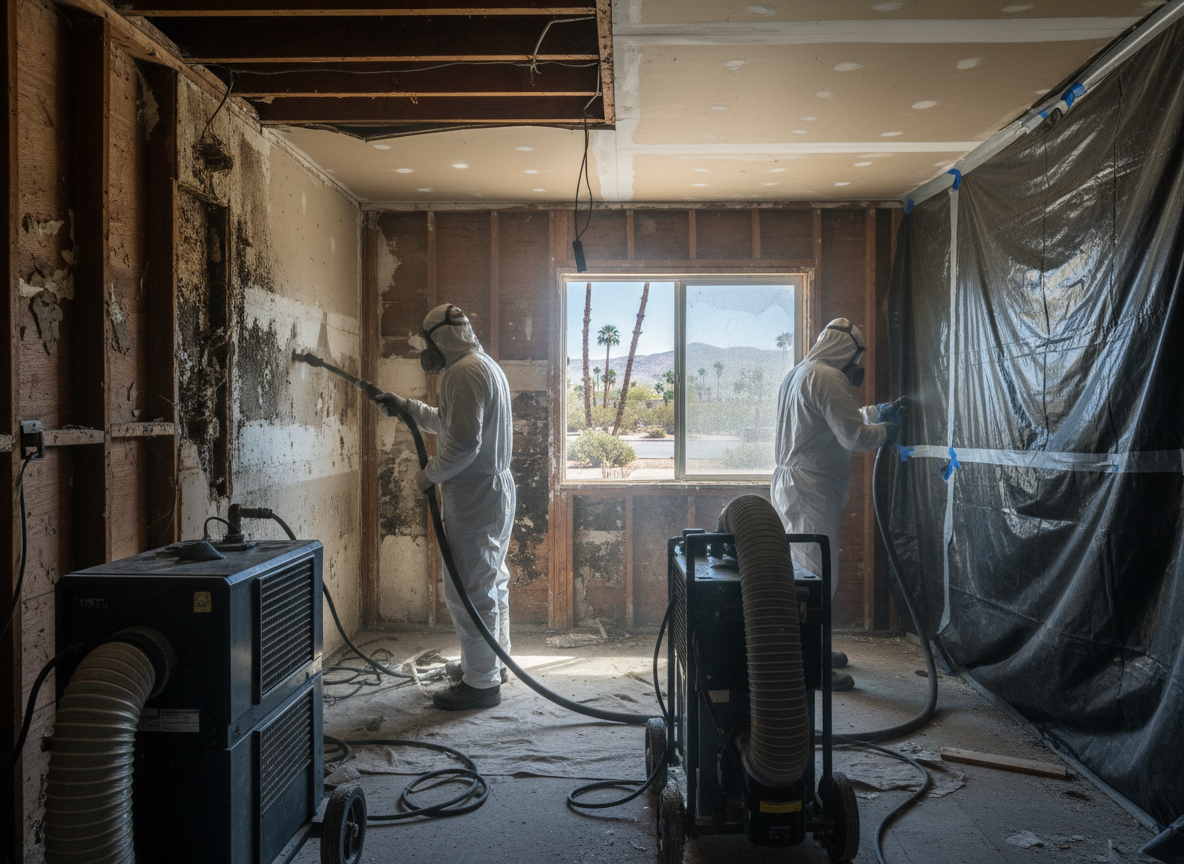
We begin with moisture mapping using thermal imaging and pin meters calibrated for desert soil conditions. Affected drywall, baseboards, and insulation are removed in contained zones to keep spores from drifting into Palm Desert-adjacent neighborhoods. Antimicrobial agents approved for porous materials are applied, followed by negative-air drying that accounts for low humidity swings typical here. Final clearance testing confirms spore counts match outdoor baselines before any reconstruction.
Homeowners often overlook AC condensate lines that clog during peak summer loads, allowing water to sit against framing for weeks. We also address crawl-space mold triggered by broken irrigation near older tract homes off Ramon Road. Every job includes photo documentation and a written scope so insurance adjusters see exactly what was removed and why.
Technician insight
In Thousand Palms, the thing that catches most people out with Mold remediation after water damage is how the hot desert climate dries the surface fast while moisture lingers behind stucco and in slab edges of 1970s-80s homes near the Coachella Valley Preserve, letting colonies keep growing until we open the wall.
Hidden Growth After Irrigation Leak
A homeowner near Ramon Road noticed musty odors after a sprinkler line cracked. We found elevated moisture in the slab edge and behind baseboards. Contained removal of affected drywall and insulation followed by targeted drying eliminated the colonies without affecting the rest of the house.
How it works
- 1
Initial Assessment
Technicians arrive 24/7, document visible water sources, and use meters to locate hidden moisture in walls and under slabs common in Thousand Palms construction.
- 2
Containment Setup
Plastic barriers and negative air machines isolate the work area so spores do not migrate into living spaces or HVAC systems.
- 3
Material Removal
Porous materials showing growth are cut out and bagged for disposal while non-porous surfaces receive antimicrobial treatment.
- 4
Drying and Clearance
Industrial dehumidifiers and air movers run until moisture levels stabilize, followed by independent spore testing before any rebuild.
Pricing
Pricing varies by affected square footage, depth of hidden growth, and whether HVAC components require cleaning; we provide a written scope before work begins.