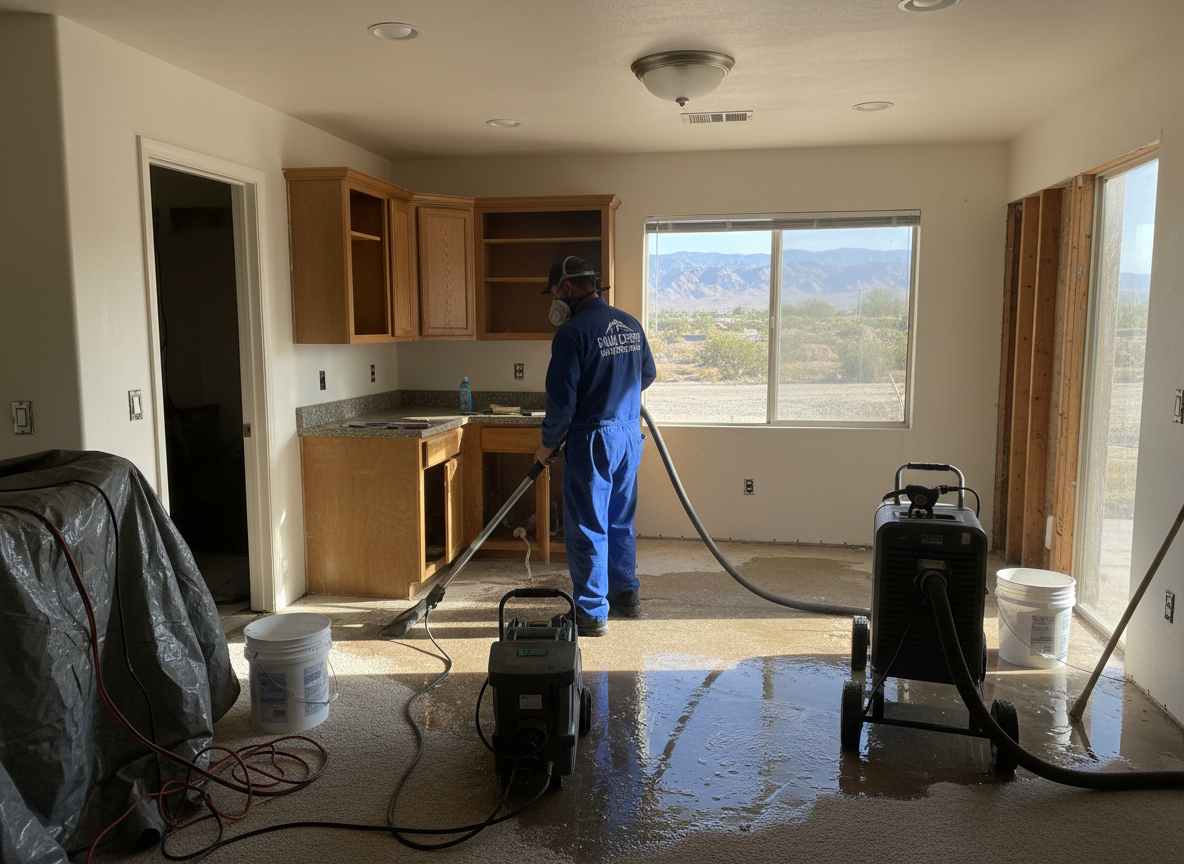
In Thousand Palms, water damage mitigation starts with immediate containment to protect drywall, flooring, and insulation common in 1970s and 1980s tract homes near Ramon Road. Desert heat accelerates mold growth once moisture lingers, so crews use targeted air movers and dehumidifiers calibrated for low-humidity air that still traps hidden water under tile or in wall cavities. Flash flooding from nearby Coachella Valley Preserve washes can push silt into crawl spaces, requiring extraction before it settles into soil around foundations.
Mitigation crews check for compromised electrical runs and HVAC ducts that run through attics, where a single roof leak during rare heavy rain can saturate blown-in insulation across an entire home. Older plumbing in Palm Desert-adjacent neighborhoods often fails at copper joints due to mineral buildup from hard water drawn from local wells. Technicians document moisture readings at multiple depths in concrete slabs to prevent callbacks when summer temperatures spike and drive remaining moisture outward.
Riverside County building practices in Thousand Palms favor slab-on-grade construction, so mitigation frequently includes perimeter trenching to relieve hydrostatic pressure after storms. Without prompt removal, water migrates into stucco walls and creates efflorescence that homeowners mistake for simple staining. Crews also isolate affected zones to avoid cross-contamination into unaffected living areas during the drying phase.
Technician insight
In Thousand Palms, the thing that catches most people out with water damage mitigation is how fast monsoon runoff from the preserve saturates the sandy soil around slab foundations. Homeowners often stop at visible puddles and miss water that has wicked under baseboards in 40-year-old homes, only to surface weeks later when the desert heat pulls it back out through the stucco.
Monsoon Runoff Under Slab
A Thousand Palms homeowner reported water seeping along the garage slab after a sudden desert storm. Inspection found silt-laden water had entered through the foundation perimeter and traveled under tile into the laundry room. Extraction and targeted drying prevented mold in the wall cavities; the home returned to normal moisture levels within four days.
How it works
- 1
Initial Assessment
Technicians arrive within hours, map all affected materials, and identify moisture migration paths through floors and walls typical in local slab homes.
- 2
Water Extraction
Standing water and saturated silt are removed using portable pumps suited to desert flash-flood debris before drying equipment is staged.
- 3
Drying and Monitoring
Industrial dehumidifiers and air movers run continuously while daily moisture readings track progress until levels match pre-loss conditions.
- 4
Final Containment Removal
Barriers come down only after verification that hidden cavities behind baseboards and under cabinets are fully dry.
Pricing
Upfront quotes provided after on-site inspection at 72390 Ramon Rd address or job site.