2026-10-15 ·
Checking For Water Intrusion In Stucco Homes Around Thousand Palms
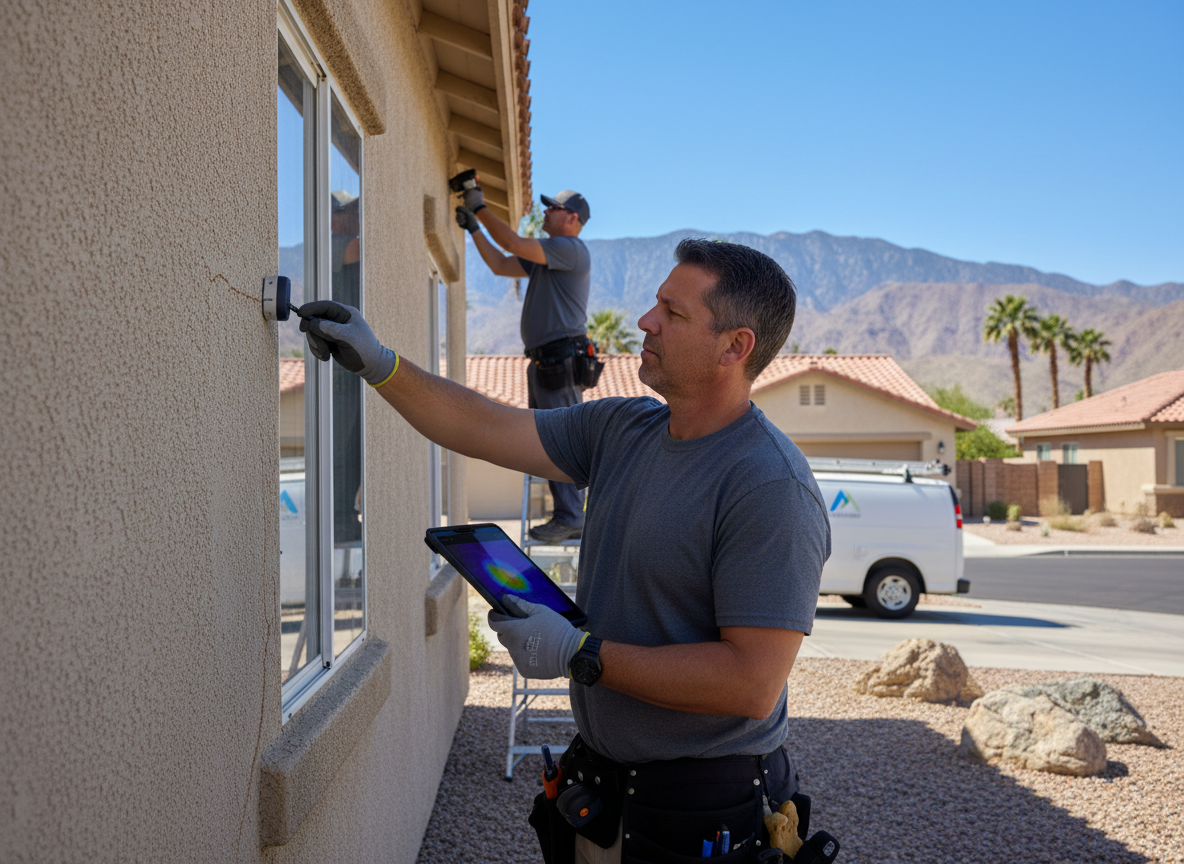
Stucco homes throughout Thousand Palms and nearby Palm Desert often show water intrusion first as hairline cracks or softening at the base of walls after monsoon rains, even though the hot desert climate keeps most days dry. These signs appear because daily temperature swings cause stucco to expand and contract, creating paths for water from rare but intense downpours common in Riverside County. Homeowners who inspect exteriors monthly during cooler months catch problems before moisture reaches framing or insulation.
Inspecting Exterior Stucco Surfaces
Walk the full perimeter of single-story stucco homes typical in Thousand Palms neighborhoods near the Coachella Valley Preserve. Look for spiderweb cracks wider than 1/16 inch, especially on south-facing walls that receive the most sun exposure. Probe soft spots with a screwdriver; any give indicates trapped moisture behind the finish. Check where stucco meets the foundation slab, as soil in this area can shift slightly during rare wet periods and pull the base away from the wall. Note any efflorescence, the white powdery residue left when water evaporates through the surface.
Examining Windows, Doors, and Penetrations
Stucco around window and door frames in Thousand Palms homes frequently fails first because sealant ages faster under intense UV and heat. Run a finger along the caulk lines; if it feels brittle or pulls away, water can enter during the next rain event. Inspect flashing above windows for gaps and check that weep holes at the bottom remain clear. Around plumbing penetrations and electrical boxes, look for dark rings or bubbling paint on the interior side of the wall. These entry points allow small amounts of water to travel downward inside the wall cavity before showing on the surface.
Monitoring Interior Indicators
Inside Thousand Palms stucco homes, check baseboards and lower drywall for buckling or discoloration after any period of heavy rain. Use a moisture meter on walls adjacent to exterior stucco; readings above 15 percent warrant further investigation. Pay attention to musty odors in closets or behind furniture placed against exterior walls. In homes with attached garages, examine the shared wall for dampness, since vehicle heat can accelerate drying on one side while moisture remains trapped on the other. Water leak restoration crews often find hidden damage in these locations after owners notice only minor interior spots.
Seasonal Timing and Tools for Checks
Perform detailed inspections in Thousand Palms during October through March when cooler nights increase condensation risk inside wall cavities. Carry a bright flashlight, moisture meter, and binoculars for second-story areas. After any storm that drops more than 0.5 inches of rain, recheck the same spots within 48 hours. Document findings with dated photos to track whether cracks or soft areas are growing. Homes located closer to Palm Desert often experience slightly different wind patterns that drive rain against specific elevations, so note prevailing wind direction during each check.
When Professional Assessment Becomes Necessary
If moisture readings stay elevated or multiple cracks appear along one elevation, contact a local team for water damage mitigation before mold develops. Early intervention prevents the need for larger repairs later. Readers concerned about long-term effects can review How To Prevent Mold Growth In Thousand Palms After A Leak for additional steps tailored to desert construction.