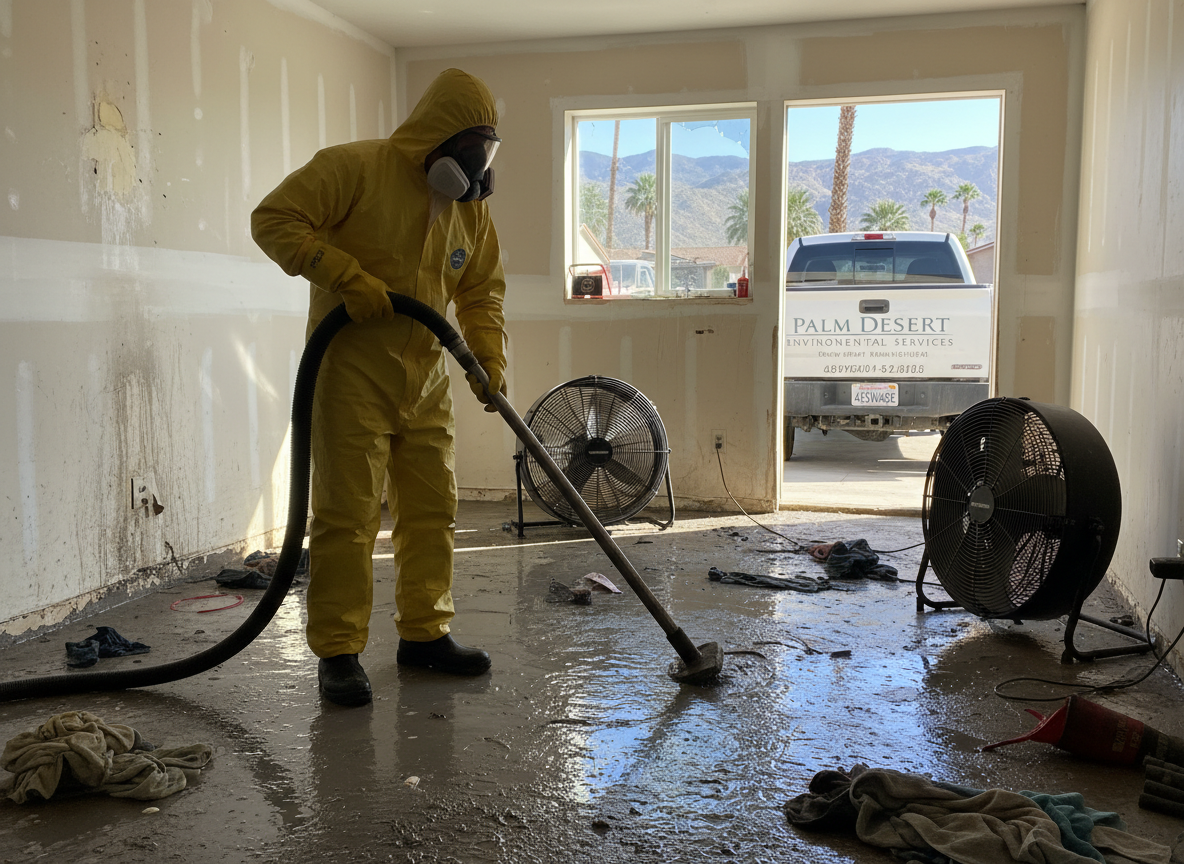
Sewage backups in Thousand Palms often trace to aging septic systems or overloaded municipal lines in neighborhoods near Ramon Road and the Coachella Valley Preserve. The region's hot desert climate speeds bacterial growth and odor penetration into drywall, subfloors, and HVAC ducts, requiring immediate extraction and antimicrobial treatment before mold sets in during summer peaks. Technicians must account for sandy soil that allows effluent to spread quickly toward foundations, especially after rare but intense monsoon rains.
Work begins with full containment to protect unaffected rooms, followed by removal of contaminated porous materials like carpet and insulation common in Palm Desert-adjacent homes built decades ago. Negative air machines and HEPA filtration keep particulates from migrating through open floor plans typical in Riverside County desert properties. Final verification includes moisture mapping and ATP testing to confirm surfaces meet safety standards before reconstruction.
Homeowners in Thousand Palms frequently discover sewage issues only after odors reach living spaces because slab-on-grade construction hides leaks under tile. Desert heat dries surface water fast, masking ongoing subsurface saturation that can compromise structural wood framing in older builds. Proper disposal follows Riverside County environmental guidelines to avoid fines from improper effluent handling near preserve lands.
Technician insight
In Thousand Palms, the thing that catches most people out with sewage cleanup is how fast the desert heat drives bacteria into the slab and under tile before homeowners notice any standing water. Older homes near the preserve often have shallow plumbing trenches that let effluent migrate toward the Coachella Valley Preserve boundary during the rare heavy rains, turning a small backup into a multi-room job.
Slab Leak Behind Tile in Central Thousand Palms
A homeowner noticed foul odors near the laundry room after monsoon runoff. Inspection revealed sewage had wicked under the slab through cracked grout lines in a 1980s build. Crew extracted effluent, removed sections of tile and underlayment, treated the concrete, and dried the subfloor over four days to prevent hidden mold growth.
How it works
- 1
Emergency Assessment
Arrive on site, identify contamination zones, and establish safety perimeters around affected areas in Thousand Palms homes.
- 2
Water Extraction and Removal
Remove standing sewage and haul away saturated materials while containing odors in the dry desert air.
- 3
Cleaning and Disinfection
Apply EPA-registered antimicrobials to hard surfaces and treat HVAC systems common in local single-story properties.
- 4
Drying and Verification
Deploy industrial drying equipment, then test moisture levels before allowing re-entry.
Pricing
Cost depends on square footage affected, depth of contamination, and whether HVAC or subfloor work is required.