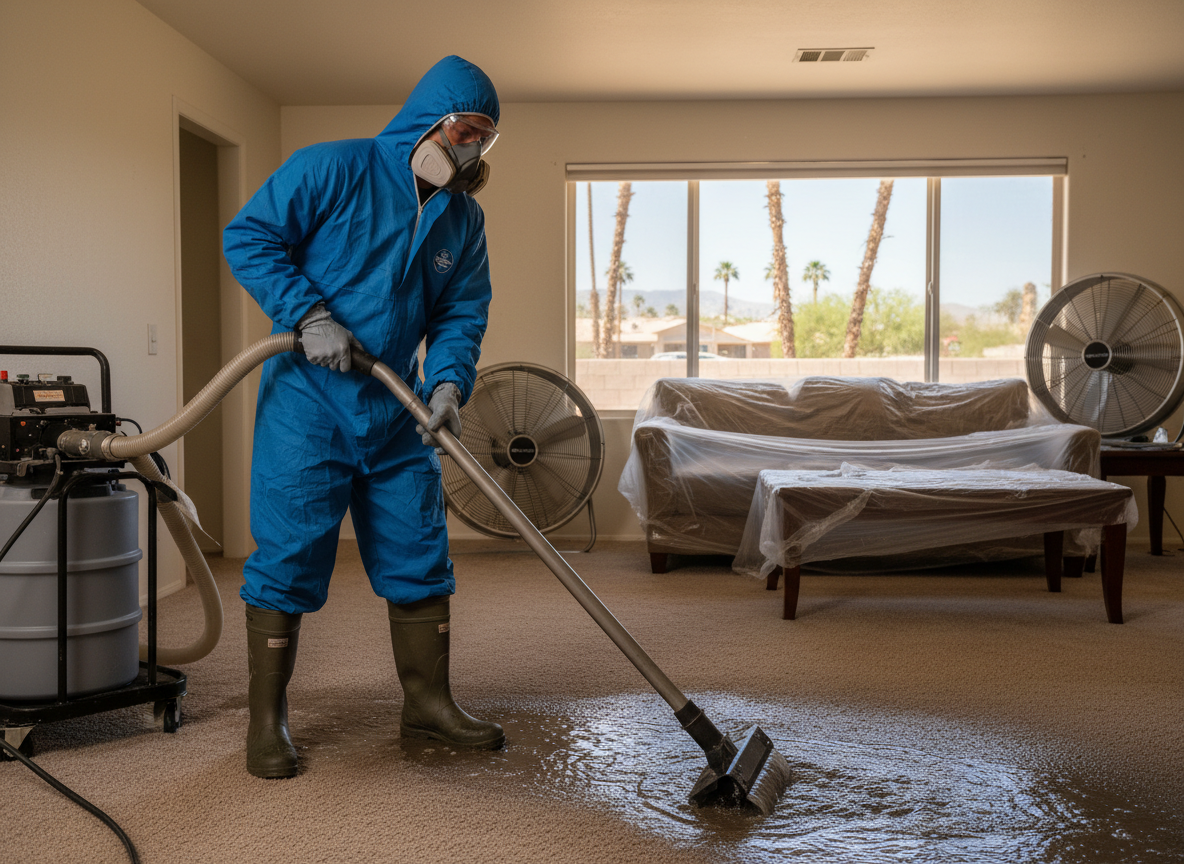
In Thousand Palms, rapid water extraction starts with pumps and truck-mounted vacuums to pull water from carpets, tile, and under slab foundations common in 1970s-1990s tract homes near Ramon Road. Desert monsoons deliver sudden heavy rain that pools against stucco walls and low-grade lots, so crews must map moisture migration into drywall before it reaches insulation. Hot daytime temperatures speed surface drying but trap moisture deeper in concrete, requiring moisture meters and targeted extraction to avoid hidden rot along the foundation edges.
Extraction teams work around furniture and appliances in single-story homes typical here, cutting carpet seams only when saturation reaches the pad and disposing of it to prevent cross-contamination. Near the Coachella Valley Preserve, wind-blown dust mixes with floodwater, creating a slurry that clogs standard wands, so technicians switch to debris filters on the first pass. Riverside County building practices often place HVAC returns low, so water pulled into ducts demands immediate negative-air isolation to stop spores from circulating once the system restarts.
After bulk removal, crews document hidden pockets behind cabinets and under vanities using infrared scans, because evaporative cooling from the dry air can mask damp spots until mold appears weeks later. Extraction stops only when readings drop below 15 percent moisture content on wood and concrete alike, a threshold that matters more here than in coastal regions because residual humidity evaporates so slowly at night.
Technician insight
In Thousand Palms, the thing that catches most people out with rapid water extraction is how fast the surface dries in 110-degree heat while water stays trapped under the slab or behind baseboards. Homeowners shut off the AC thinking it helps, but the low airflow lets moisture creep into the stucco weep holes along the north side of homes near the preserve.
Monsoon Runoff Under Slab
Heavy rain pushed water against a 1980s home off Ramon Road. Extraction crews found pooling beneath the laundry room slab and inside the HVAC return. They ran pumps for four hours then used perimeter wands to clear the remaining moisture. Follow-up readings the next morning confirmed the concrete had returned to acceptable levels and no mold growth occurred.
How it works
- 1
Arrival And Safety Setup
Technicians arrive with extraction trucks and set containment barriers to isolate wet zones from living areas.
- 2
Standing Water Removal
High-volume pumps and wands pull bulk water from floors and low spots while monitoring for hidden slab seepage.
- 3
Moisture Mapping
Infrared and pin meters locate remaining damp areas in walls, underlayment, and concrete before secondary drying begins.
- 4
Final Extraction Pass
Targeted tools pull residual water from edges and cavities, then crews confirm dryness levels before equipment removal.
Pricing
Pricing depends on water volume, access under slabs, and whether carpet or pad must be removed.