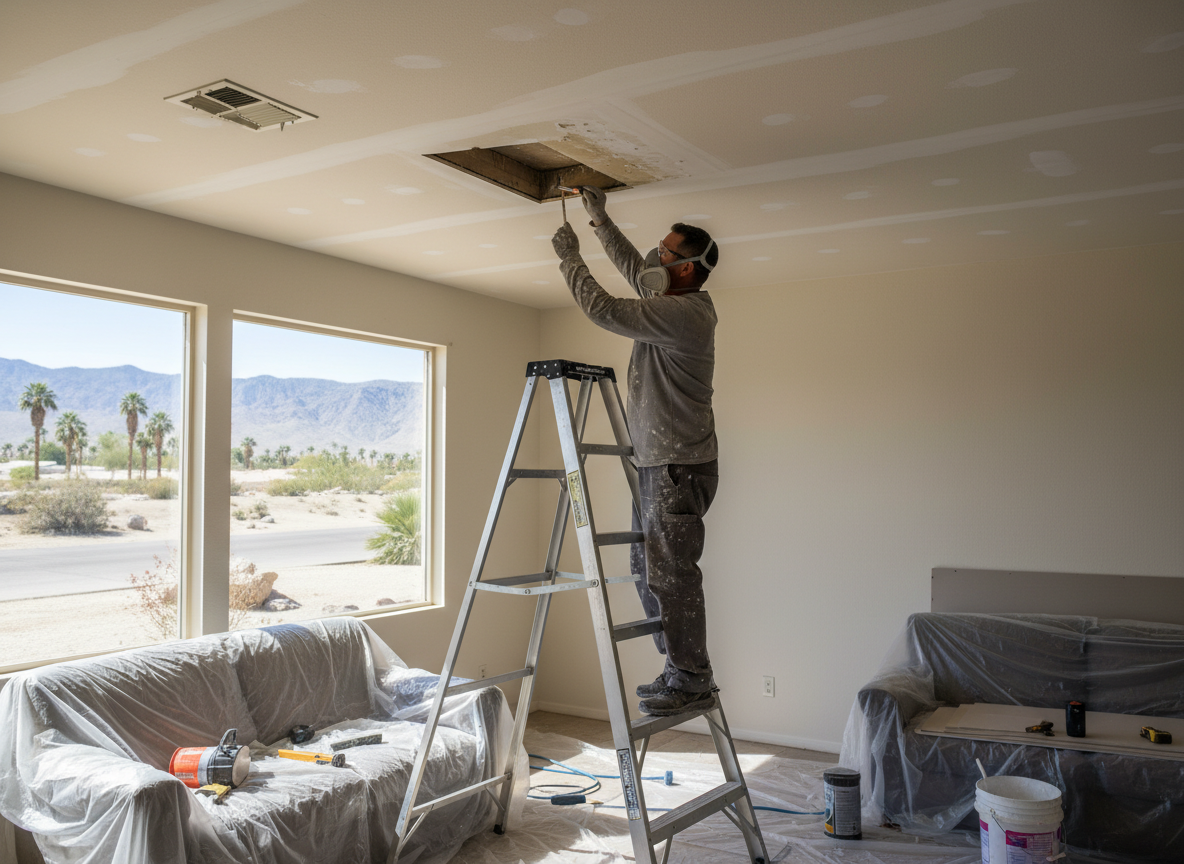
Ceiling water damage in Thousand Palms often starts from clogged AC condensate lines or rare monsoon roof leaks that soak drywall and insulation. Homes built in the 1970s and 1980s along Ramon Road and nearby streets commonly have flat or low-slope roofs that trap water when the infrequent heavy rains hit. Once moisture reaches the ceiling cavity it spreads quickly through the dry desert air, creating hidden mold on the back side of the drywall before any visible stain appears downstairs.
Repair begins with moisture mapping using infrared cameras to find the full extent of saturation without cutting unnecessary holes. Technicians isolate the source—whether a failed roof flashing near the Coachella Valley Preserve or an overflowing AC pan—then remove affected drywall and insulation in sections sized to the actual wet area. Proper drying requires commercial air movers and dehumidifiers run for several days because the low humidity outside can mask remaining moisture trapped inside the ceiling joists.
After drying, new drywall is installed and finished to match the existing texture, then painted with a stain-blocking primer to prevent bleed-through. Local building practices in Riverside County require proper ventilation when replacing large ceiling sections to avoid trapping humidity from bathroom exhaust fans that vent into the attic space.
Common Causes in Desert Homes
Hot daytime temperatures drive heavy AC use, leading to condensate backups that homeowners often overlook until a stain forms. Monsoon storms in late summer can overwhelm older roof drains on homes near Palm Desert, pushing water under flashing and into the ceiling.
Technician insight
In Thousand Palms the thing that catches most people out with Ceiling water damage repair is how fast an AC condensate backup soaks the entire attic insulation in these 1980s ranch homes along Ramon Road. Homeowners shut off the unit and think the stain is it, but the real job is pulling two feet of wet cellulose out before it molds in the dry heat.
AC Line Leak in 1979 Home
A homeowner near the Coachella Valley Preserve noticed a brown ceiling ring after a week of heavy AC use. Inspection found the condensate line clogged at the attic penetration, saturating insulation over two joist bays. Crew removed wet material, dried the cavity for four days, and replaced the drywall section to prevent mold growth.
How it works
- 1
Source Identification
Inspect roof, AC lines, and plumbing penetrations using moisture meters and thermal imaging to locate the leak origin.
- 2
Containment and Removal
Set up containment barriers, cut out saturated drywall sections, and extract wet insulation while protecting floors below.
- 3
Drying and Monitoring
Place commercial drying equipment and check moisture levels daily until the structure reaches acceptable dryness.
- 4
Repair and Finish
Install new drywall, tape, texture, and apply stain-blocking primer before final paint matching.
Pricing
Upfront quotes after on-site inspection; cost driven by ceiling area affected and drying time required.